AI with the power of the sorcerer’s apprentice?

November 19, 2025

Artificial intelligence (AI) fascinates and frightens us at the same time. At the start of the MU lecture series in the winter semester, Ismene Poulakos presented the results of a recent study by the rheingold Institute on the future of work with AI.

“How is AI changing the job market?” was the question posed by MU President Prof. Dr. Lorenz Pöllmann in his welcome address. Students and faculty from all MU locations and departments then spent 90 minutes via Teams video conference gaining exciting insights into the results of the study “AI and the Future of Work: Stress Test for Leadership and Collaboration.” The empirical study was conducted by the rheingold Institute on behalf of the Randstad Foundation. rheingold company spokesperson Ismene Poulakos, who herself conducted in-depth psychological interviews for the study in the summer, explained that most of the test subjects initially reported a great fascination with AI. Initial encounters with AI often seemed magical when AI efficiently solved everyday problems such as tax returns or travel planning. Given this ease, AI seemed to many like a miracle cure that quickly, creatively, and amazingly simply turned us into a kind of sorcerer’s apprentice. This allowed tedious routine tasks to be completed quickly and accurately. This relief freed up more time for creative, strategic, or interpersonal activities.

manners

High approval ratings prevail

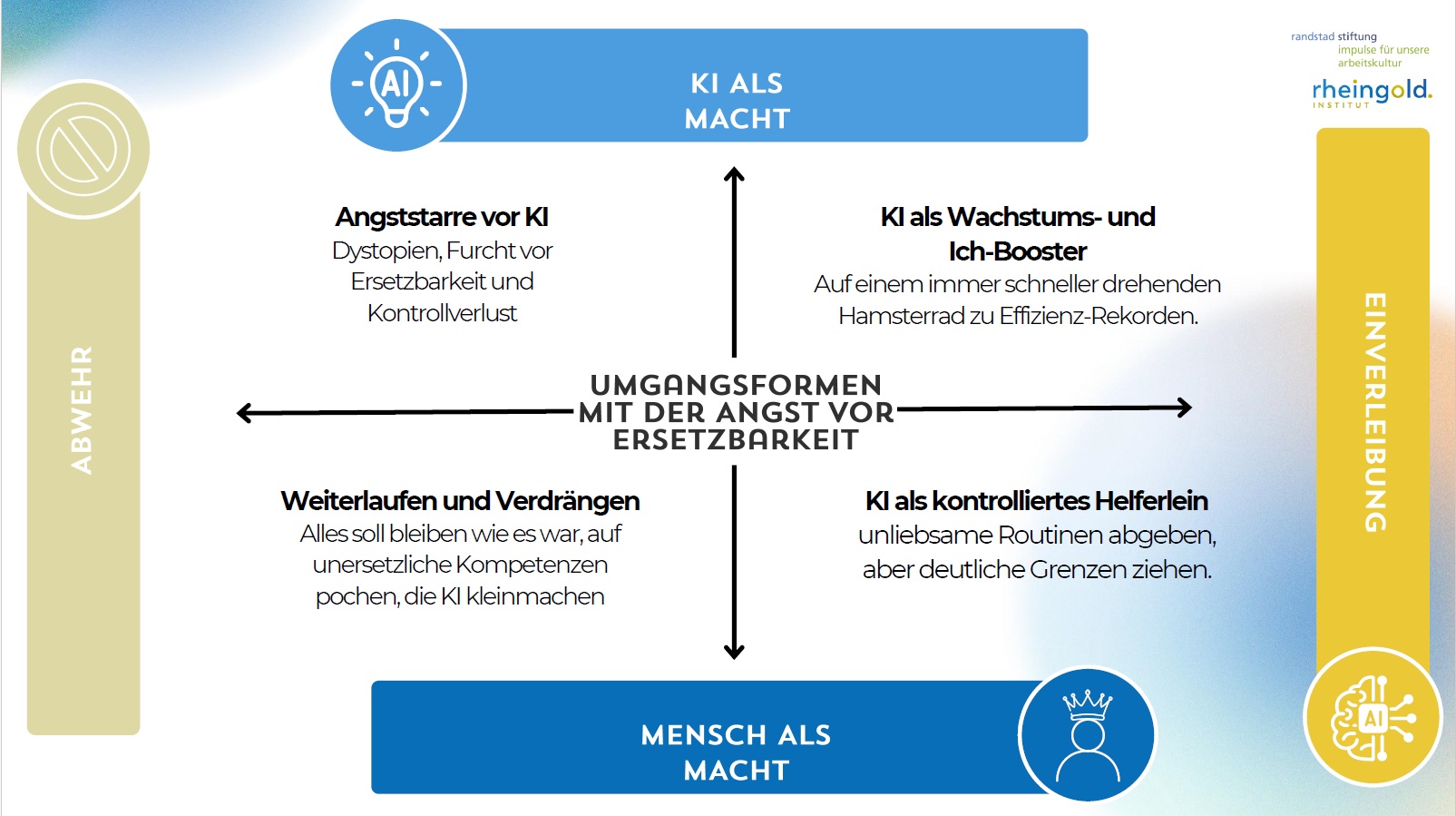
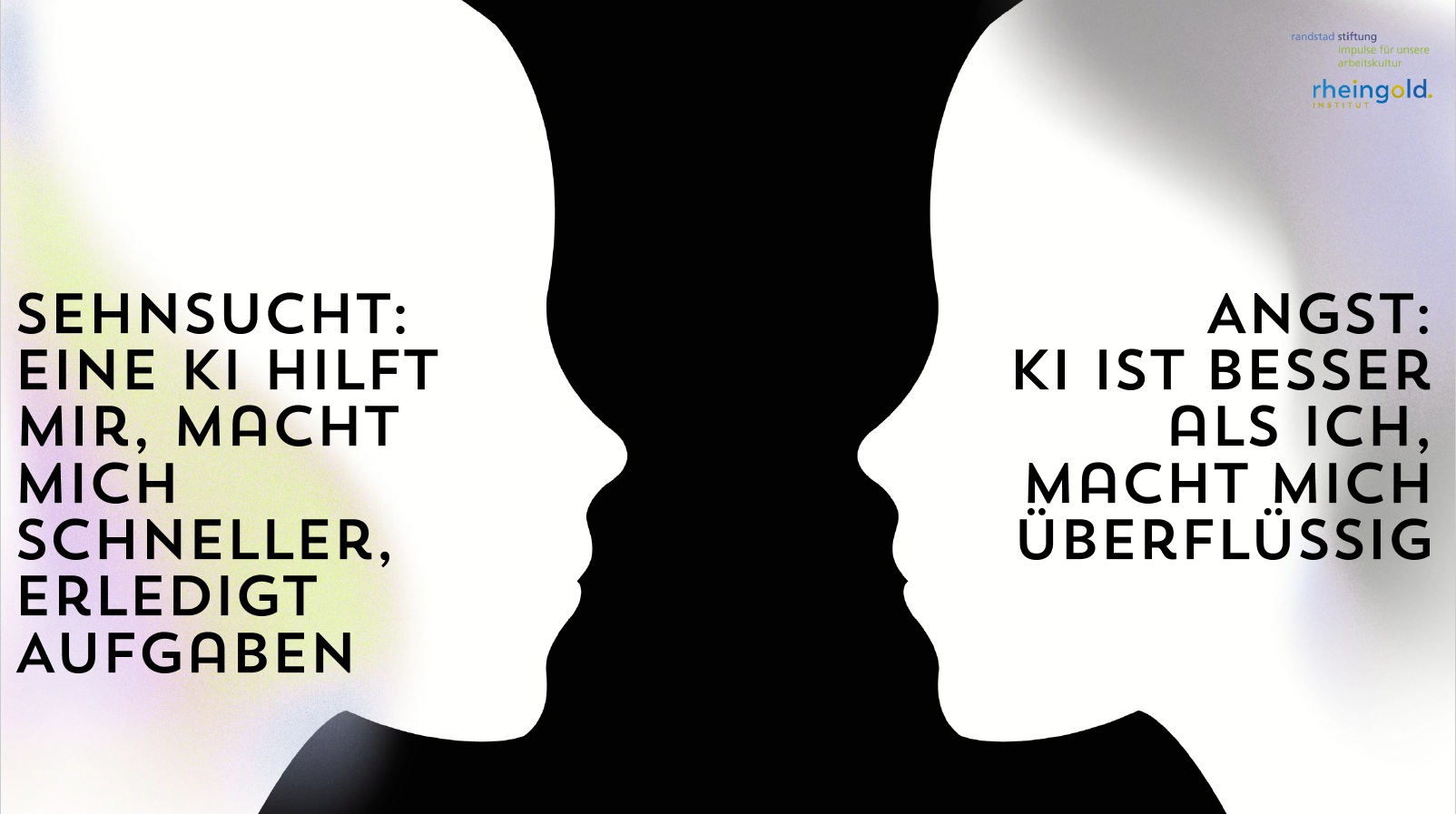
In a quantitative survey of 1,015 participants, 76 percent said they use AI at least once a week, reported Ismene Poulakos. Eighty-three percent said they were more fascinated than frightened by AI. Seventy-eight percent agreed with the statement that AI opens up new opportunities for the world of work, and 72 percent said they felt supported by AI in their everyday work. However, in the course of the 35 in-depth interviews conducted subsequently, fears and concerns about AI and the threat of job losses also emerged. In the interviews, the power of AI was often “downplayed” in order to suppress threatening aspects. The fear of loss of control and the concern that AI tools would compete with human workers were identified. This creates the ambivalence that AI supports us on the one hand, but also threatens us with helplessness on the other.

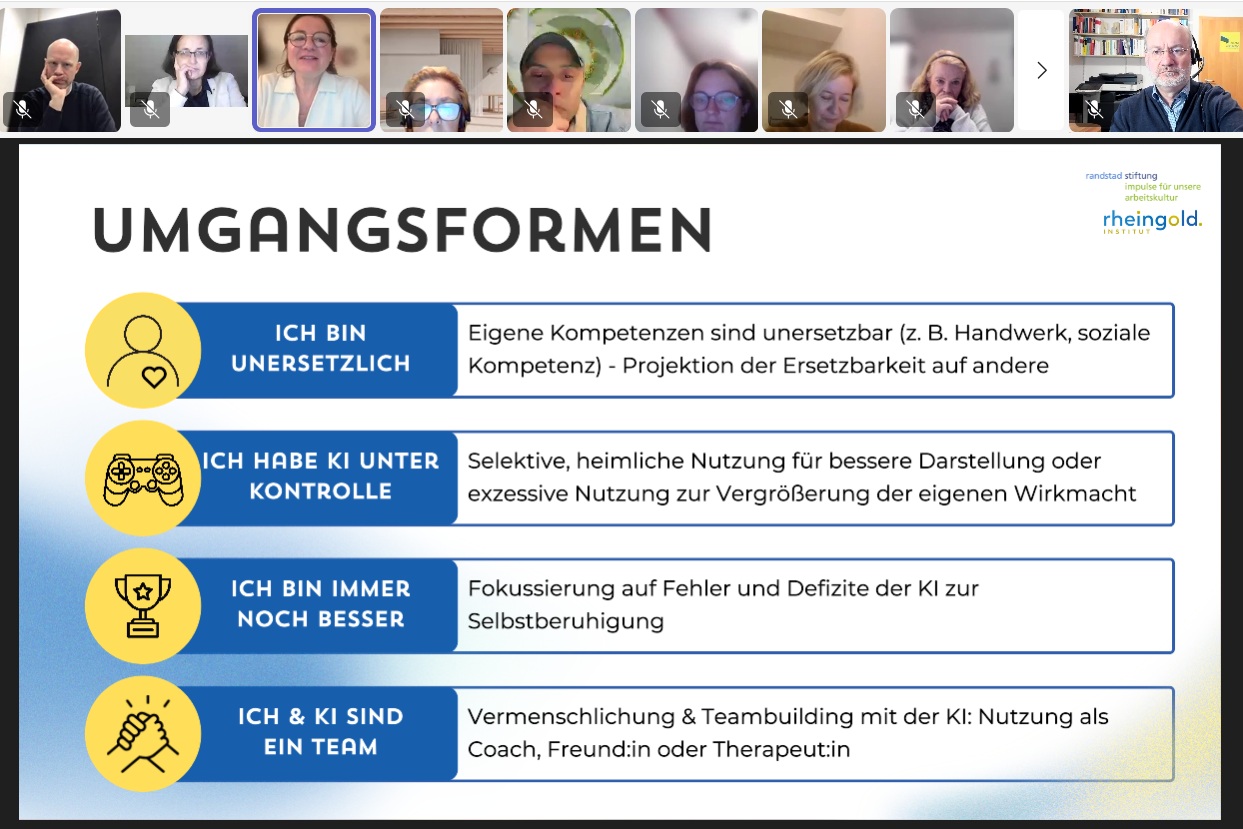
Artificial intelligence is perceived as a “formless, intangible power,” said Ismene Poulakos. AI challenges human skills and identity in the workplace, creates massive pressure for change, and awakens a feeling of being replaceable. People respond to this with different strategies. On the one hand, they declare their own skills to be “irreplaceable” and assume that humans only use AI as a tool. On the other hand, AI is humanized as a partner. This compensates for feelings of powerlessness in this age of multiple crises.

Excerpt from the presentation by the rheingold Institute

AI integration as a stress test

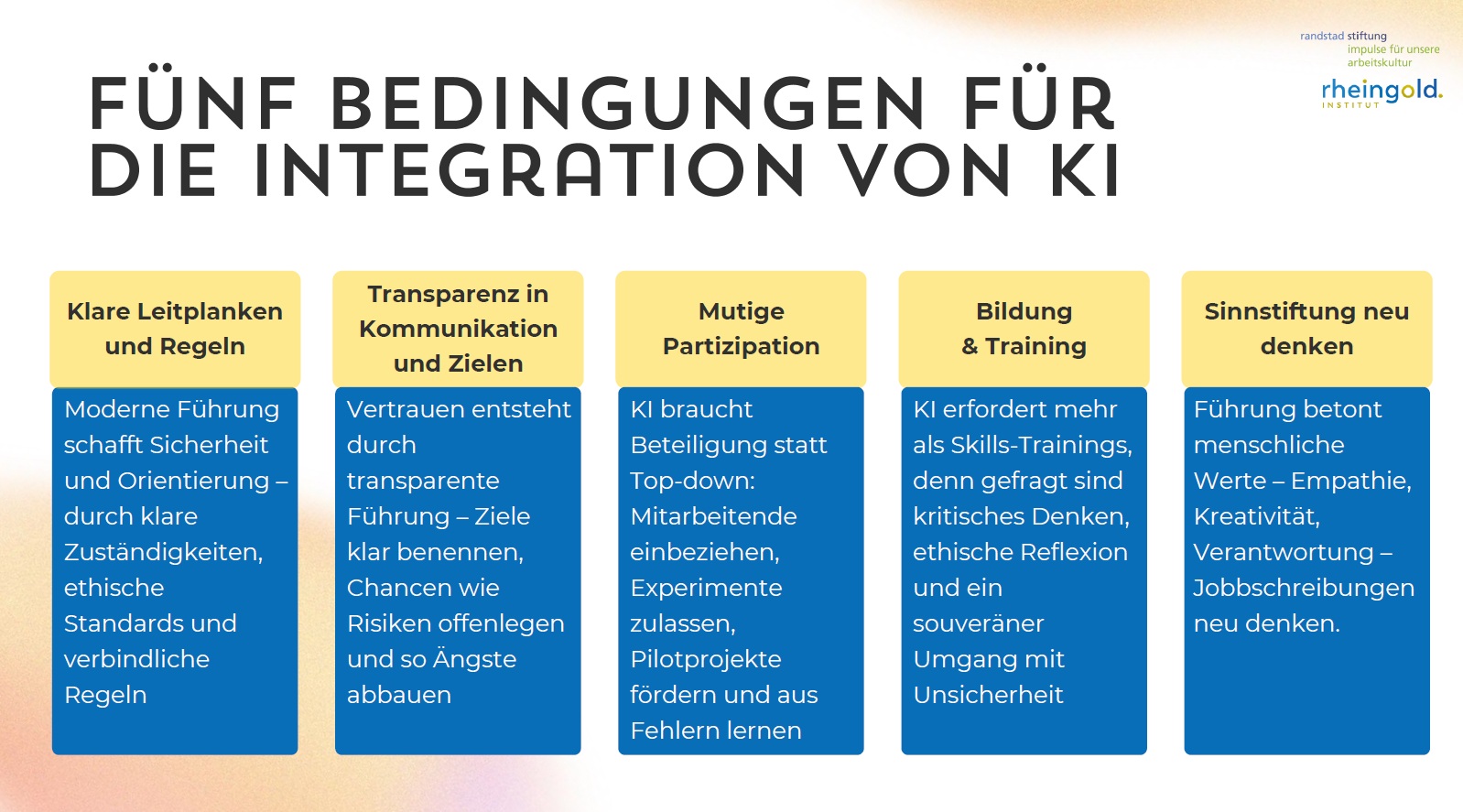
In view of the uncertainties described in dealing with AI, Ismene Poulakos described the integration of AI into the world of work as a “stress test.” This involves not only technical processes, routines, and structures, but also cultural and psychological issues. If these remain unresolved, employees could perceive the hoped-for AI assistance as an uncontrollable threat, creating an eerie sorcerer’s apprentice feeling. A lack of training, transparency, and classification of AI results could ultimately increase uncertainty. This makes transparency and clear rules for dealing with AI all the more important, recommended Ismene Poulakos. In addition, the rheingold Institute considers an open culture of participation, reflection, and further training to be important, as well as an emphasis on human values such as empathy, creativity, and responsibility.

In the concluding discussion moderated by MU Vice President Prof. Dr. Friederike Bing, it became clear which questions cannot yet be answered. These include, for example, the large discrepancy between the positive assessments in the quantitative survey on the one hand and the great skepticism in the in-depth psychological interviews on the other. It is also unclear whether the use of AI will trigger a digital knowledge gap. It became clear that AI offers great potential for the world of work, but at the same time poses a psychological challenge. Ismene Poulakos reported that many managers currently feel helpless when it comes to AI. In view of the many unanswered questions, she emphasized that transparency and openness in communication are a “basic requirement” for dealing with AI in the world of work. Otherwise, there is a risk of “very, very strong resistance” among employees.

Tips from the rheingold Institute for integrating AI into the workplace
As determined by the rheingold Institute: How employees deal with AI in the workplace